
Powering Dreams. Shaping Careers
The Career Development Cell (CDC) at Vardhaman College of Engineering (VCE) serves as the strategic nexus between academic preparation and professional integration. Operating on the principle that career readiness is a continuous, four-year developmental process, the CDC provides a structured ecosystem designed to transition students from foundational learners into highly competent, industry-ready professionals.
Our comprehensive support framework encompasses:
To provide transformative education and career development that empowers every student of Vardhaman College of Engineering to achieve their full potential as a professional, as a leader, and as a responsible member of society.
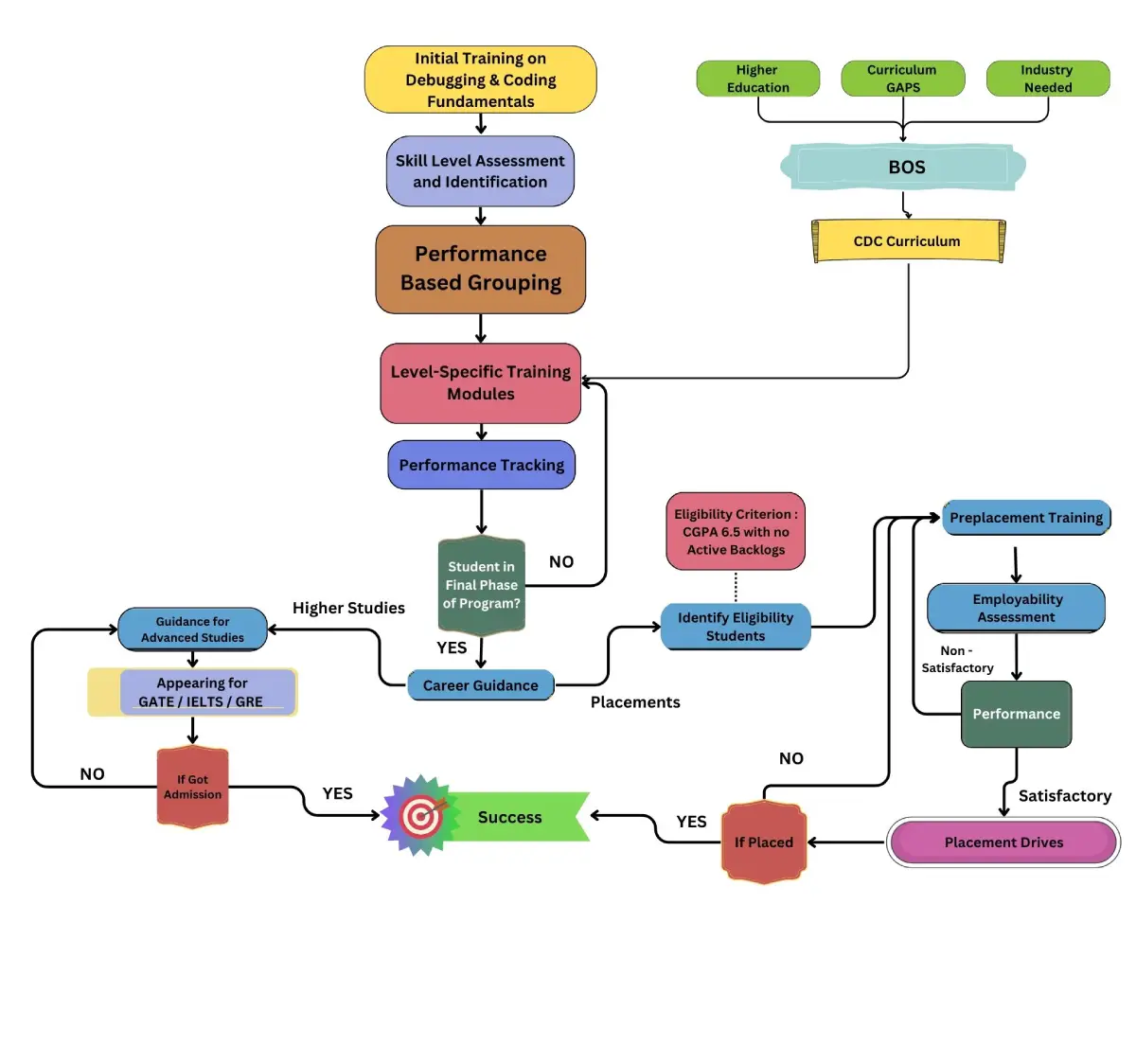
The CDC operates a meticulously sequenced curriculum that aligns technical proficiency with behavioral maturity. Our tripartite framework—Technical, Employability, and Life Skills—ensures the holistic development of the student.
CDC has a well laid out training schedule for all the years ranging from I Year to IV Year UG Students and PG Students.
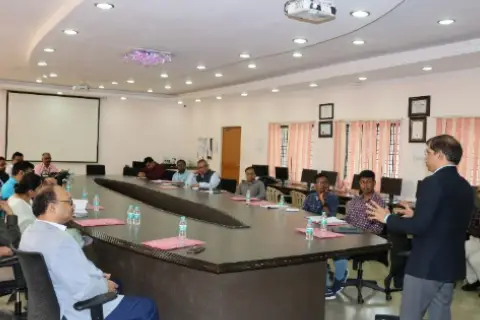
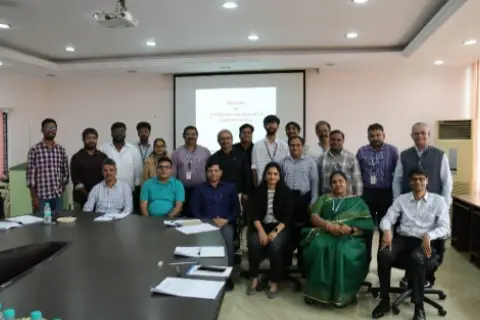
A job-focused curriculum carefully designed and scheduled with the help of an exclusive CDC Board of Studies which comprises of both Academic and Industry experts. This ensures that the syllabus and schedule are aligned with current market demands. Students engage in intensive practice to develop mastery of essential skills, reinforced by carefully designed assessments.
They contribute to making comprehensive curriculum that includes Computer Programming Essentials, Logical Programming, Augmented Data Structures, Advanced Data Structures and Algorithms, Analytical Reasoning, Quantitative Aptitude, Life Skills Development, Autodesk and Core sector-specific market-relevant syllabus. These offerings, consistently implemented over multiple years, showcase a deep commitment to nurturing both technical expertise and interpersonal skills, ensuring students are exceptionally prepared to excel in the competitive job market and pursue advanced academic and entrepreneurial opportunities.
To address the dynamic nature of global technology, the CDC enforces a rigorous, semester-wise technical progression:
These courses are assessed in the same manner as regular courses, with both continuous assessments (60 marks) and summative evaluations (40 marks).
In addition, upskill to mention the above areas, conducted assessment with tools to grade them.
Through a well-structured training approach, CDC enhances students' coding skills with HackerRank competitions, TCS CodeVita, and Smart Interviews programs, which focus on data structures, algorithms, problem-solving, and critical thinking. To strengthen industry readiness, competitive coding bootcamps and Power BI training are also conducted.
For non-technical training, campus recruitment programs for third-year students include interview preparation, technical skills, placement grooming, and real-time internships.
Additionally, Value-Added Courses (VAC) in logical reasoning, DSA, QRE, and Q&LR ensure skill accessibility for all students, while a separate DSA training program is available for those not enrolled in the Smart Interviews initiative. The CDC summer training programs offer a versatile platform for skill development across multiple domains, enhancing students' practical exposure.
This training is completely governed and executed by the cell. Apart from the above, Training and Placement Cell provides additional training from III year onwards with the resource persons drawn from external agencies.
These experts deliver high-quality training in areas such as Data Structures, Algorithms, Python Programming, and Analytical Reasoning, ensuring students are well-prepared for diverse career pathways.